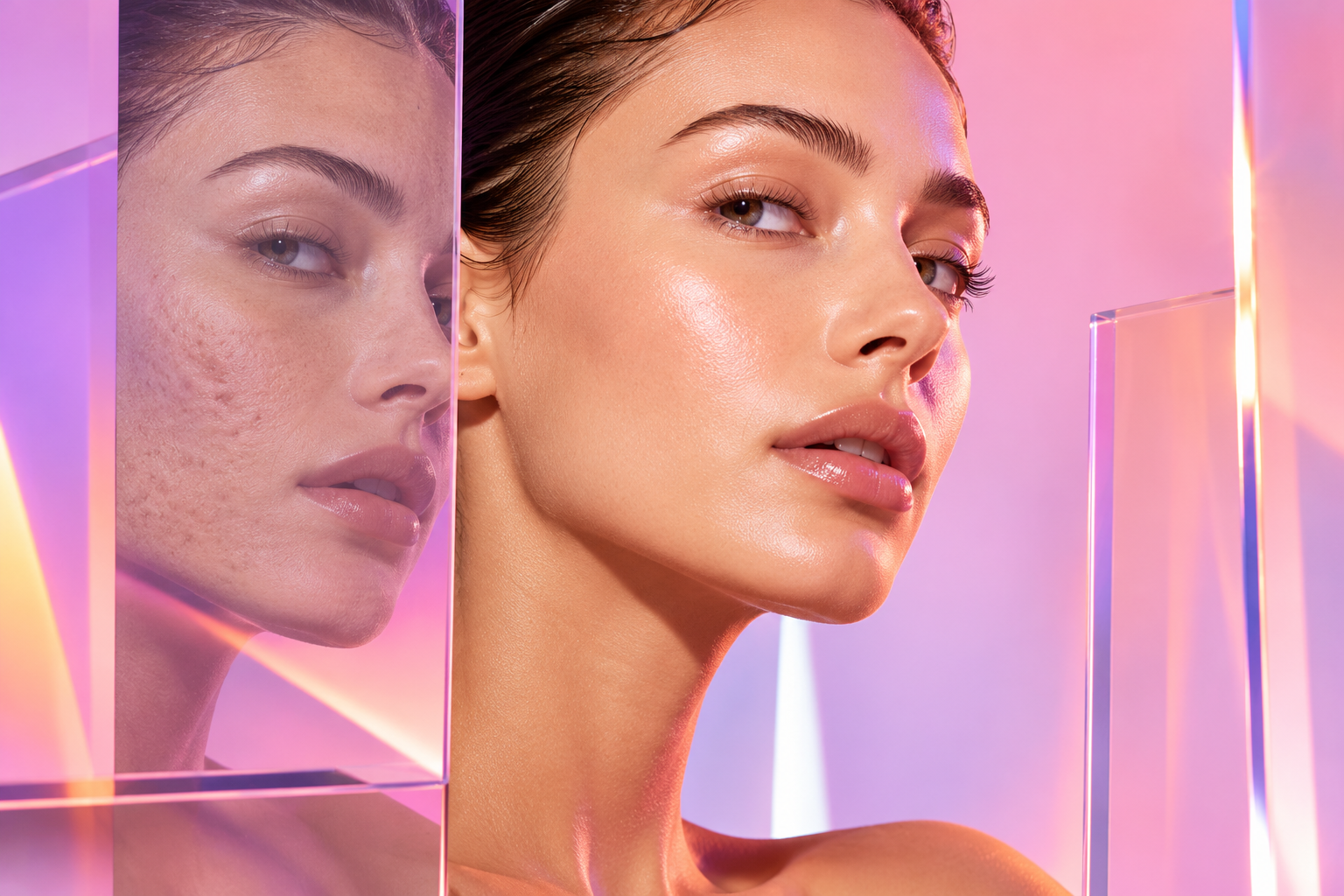
Acne may have cleared up years ago, but the scars it leaves behind can be harder to improve. You might notice small indentations across your cheeks, uneven texture that shows up more in certain lighting, or deeper scars that make your skin look less smooth.
Unlike temporary blemishes, acne scars involve changes beneath the skin’s surface, so skincare alone often has little effect. Fortunately, laser resurfacing and RF microneedling can help improve their appearance. At The Lovely Clinic in Knightsbridge, London, we offer INTRAcel RF Microneedling, ProFractional laser and HALO laser, each suited to different skin concerns.
So, which treatment is best for your acne scars, and what sort of improvement can you expect?
Why Do Acne Scars Form?
Acne scars develop when inflammation damages the collagen that supports your skin. As the area heals, the body produces new collagen, but it doesn’t always replace the damaged tissue evenly. Too little collagen can leave small depressions, while excess collagen may create raised scars.
Genetics, inflammation severity, and picking at spots can all influence whether scarring develops.
It’s also worth distinguishing acne scars from post-acne marks. Red or brown marks are changes in skin colour that may fade naturally, whereas true scars involve changes to the skin’s structure and often need more targeted treatment.
What Are the Different Types of Acne Scars?
Acne scars come in different shapes and depths, which affects which treatments are likely to help. Acne scar types that sit below the surrounding skin are:
- Rolling scars: Broad, shallow depressions that make the skin look slightly wavy. Some are attached to deeper tissue.
- Boxcar scars: Round or oval indentations with defined edges, commonly found on the cheeks.
- Ice pick scars: Small, narrow scars that extend deeper into the skin and are often more difficult to treat.
Raised scars can also develop, such as hypertrophic or keloid scars, although these usually need a different approach.
We often see patients with a mix of scar types, so assessing the skin properly is important before choosing a treatment.
Can RF Microneedling Get Rid of Acne Scars?
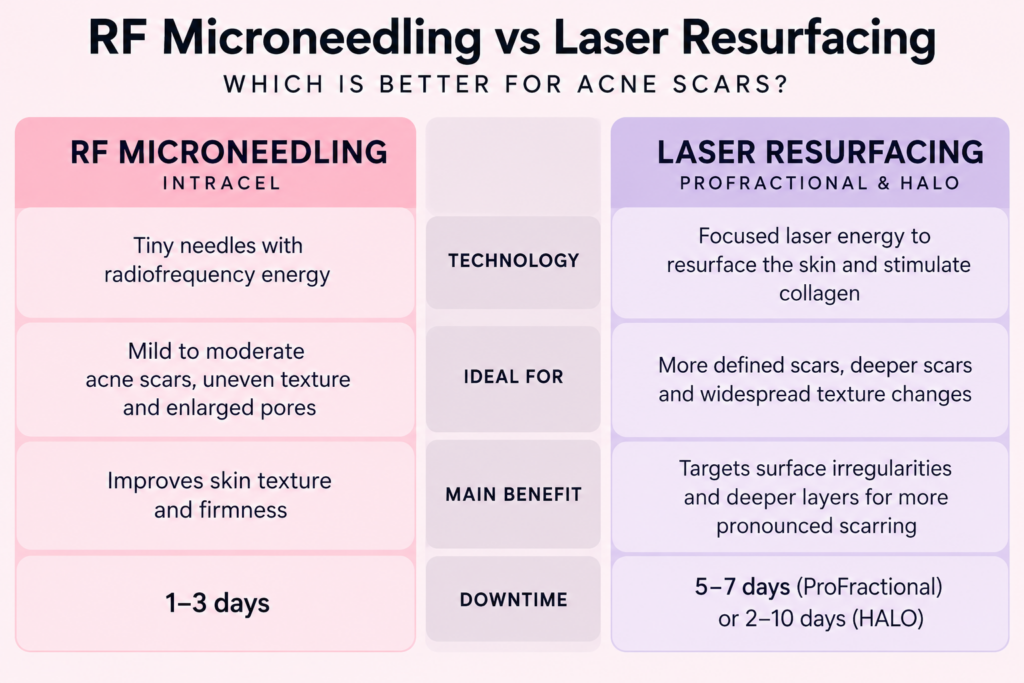
INTRAcel RF Microneedling combines fine needles with radiofrequency energy to encourage the skin’s natural repair process.
The needles create tiny, controlled injuries while delivering heat to deeper skin layers. This stimulates collagen production, helping to improve uneven texture and the appearance of shallow scars over time.
How Does INTRAcel Improve Acne Scarring?
INTRAcel works within the dermis, where much of the skin’s supporting collagen is found. As new collagen develops and existing tissue remodels, some depressed scars may become less noticeable.
One advantage is that it can treat deeper tissue without extensively resurfacing the skin’s outer layer. This makes it a useful option for patients who want to improve their skin texture but would prefer a shorter recovery period than more intensive laser treatments.
Who Is INTRAcel Best For?
INTRAcel is often suitable for mild to moderate depressed acne scars, particularly when accompanied by enlarged pores, uneven texture or reduced firmness.
It may also be considered for some darker skin tones, although settings must be carefully selected to reduce the risk of pigmentation changes.
A course of approximately five treatments may be recommended, depending on the scarring.
Recovery: Mild redness, swelling and sensitivity are common, with downtime generally around one to three days. Improvements develop gradually as collagen remodels.
Is Laser Resurfacing Better for Deep Acne Scars?
Laser resurfacing uses concentrated light energy to create controlled changes within the skin, encouraging renewal and collagen production.
Depending on the technology, treatment can remove microscopic areas of damaged tissue, heat deeper layers or combine both approaches.
It can be particularly helpful for scars with defined edges or noticeable surface irregularities. However, the best laser choice depends on the type and depth of scarring.
ProFractional Laser: For More Defined Acne Scars
ProFractional laser resurfacing creates tiny channels in the skin while leaving surrounding tissue relatively untouched.
These controlled injuries encourage healing and collagen remodelling, helping to soften the appearance of scars.
A key advantage is that we can adjust treatment depth and intensity. This lets us focus on areas with more noticeable scarring rather than treating the entire face at the same intensity.
Which Acne Scars Respond Best to ProFractional?
ProFractional may be particularly useful for shallow to moderately deep boxcar scars and uneven skin texture.
By softening the edges of certain scars, it can help the indentations blend more naturally with the surrounding skin.
However, very deep ice pick scars or rolling scars attached to underlying tissue can be more challenging and may not respond sufficiently to resurfacing alone.
Recovery: Allow approximately five to seven days of downtime, although redness may last longer. Depending on scar severity, you may consider a course of about three to ten treatments.
HALO Laser: Can It Treat Acne Scars and Uneven Skin Tone Together?
HALO laser combines two laser wavelengths to improve the skin at different depths.
One creates microscopic areas of surface renewal, while the other heats deeper tissue to encourage collagen remodelling.
This makes HALO particularly interesting when acne scarring is accompanied by uneven skin tone, enlarged pores or sun damage.
Who Is HALO Best For?
HALO may be a good option when the concern isn’t just individual acne scars but the overall appearance of the skin.
For example, someone with widespread shallow scarring, rough texture, and residual pigmentation may benefit from an approach that addresses several concerns at once.
Where scars are deeper or have sharply defined edges, ProFractional may offer more targeted treatment.
Recovery: Downtime generally ranges from two to ten days, depending on treatment intensity. Redness, swelling and a roughened skin texture are common during healing, with improvements continuing over the following months.
Which Acne Scar Treatment Is Right for You?
The best treatment for acne scars depends on more than how noticeable they are. We also consider the type of scarring, your skin tone, whether you still experience breakouts and how much recovery time you’re comfortable with.
For milder scarring and uneven texture, RF microneedling may be a good starting point. More defined scars may benefit from ProFractional laser, while HALO can be especially useful when scarring is accompanied by pigmentation or broader changes in skin quality.
Sometimes, a combination of treatments makes sense, especially when different scar types are present. However, more treatment doesn’t necessarily mean better results. The goal is to choose an approach that suits your skin, supports proper healing, and delivers gradual, natural-looking improvement.
Although acne scars cannot always be removed completely, the right treatment plan can make them noticeably less visible and help your skin look smoother and more even.
Frequently Asked Questions About Acne Scar Treatment
Can Old Acne Scars Be Treated After 10 or 20 Years?
Yes. Even longstanding acne scars may improve with laser resurfacing or RF microneedling. A scar’s age is usually less important than its depth, shape, and how it is attached to surrounding tissue.
Does Acne Scar Treatment Hurt?
Clinicians apply a topical anaesthetic beforehand to make treatment more comfortable. You may still feel some warmth, pressure or prickling, depending on the technology and treatment settings.
Can Acne Scars Come Back After Laser Treatment?
Improvements to existing scars can last a long time, although new acne breakouts may cause additional scarring. Natural changes in skin quality over time can also affect how scars appear.
Can You Wear Make-up After Acne Scar Treatment?
You’ll need to wait until your skin has recovered sufficiently before applying make-up. This varies by treatment, especially after laser resurfacing, and your practitioner will tell you when it’s safe to resume your usual routine.
Is Acne Scar Treatment Suitable for Darker Skin Tones?
Yes, some options may be suitable, but careful assessment is essential because darker skin can be more prone to post-inflammatory pigmentation. RF microneedling may suit certain patients, while laser suitability depends on individual skin characteristics and treatment settings.
Considering Acne Scar Treatment in London?
Acne scars aren’t all the same, and the most effective approach depends on their depth, shape and how your skin responds to treatment. If you’d like to explore your options, you can book a consultation to discuss what may work best for your skin and what results you can realistically expect.
We welcome patients from Knightsbridge, Chelsea, Kensington, Belgravia and across London.