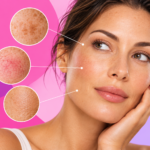
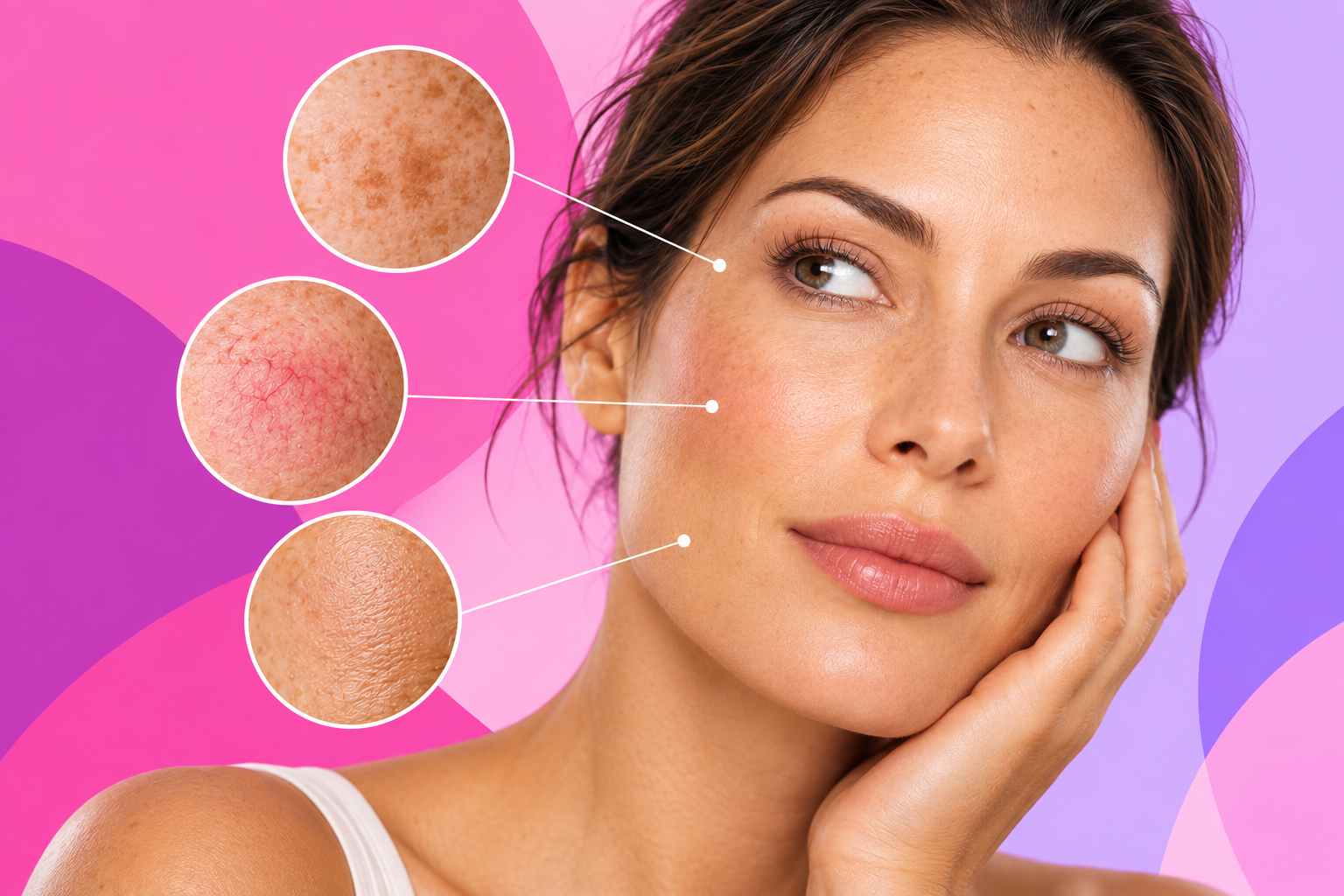
Brown spots across the cheeks, persistent redness around the nose or a complexion that looks less even than it used to are all commonly described as “uneven skin tone”. But although they may appear together, they are not necessarily caused by the same thing.
Brown pigmentation is usually linked to melanin, while redness may come from visible blood vessels, flushing or a condition such as rosacea. It is also common to have both, particularly where there has been years of sun exposure.
At The Lovely Clinic in Knightsbridge, London, we often see patients who describe their concern simply as pigmentation or uneven skin. Looking more closely at the colour, pattern and condition of the skin can tell us much more about what is causing it and, importantly, which type of treatment may be appropriate.
This is why choosing a laser or light treatment starts with understanding the skin rather than choosing a device.
Why Does Uneven Skin Tone Need Different Treatments?
The colour we see on the surface of the skin can come from different structures.
Brown spots are generally associated with excess melanin, while red marks may relate to small blood vessels. Diffuse flushing behaves differently again, and melasma can be influenced by several factors including hormones, UV exposure, heat and inflammation.
There may also be changes in texture. Sun exposure over time can leave pigmentation alongside enlarged pores, roughness or fine lines, so sometimes the concern is not simply colour but a broader change in skin quality.
Two people can therefore both describe their skin as “uneven” while having quite different underlying concerns.
What Is the Best Laser Treatment for Brown Spots?
The most appropriate treatment depends on the type and pattern of pigmentation.
Sunspots and age spots caused by accumulated UV exposure can respond well to treatments that target unwanted pigment. Melasma and more complex pigmentation need a more considered approach because they behave differently from an isolated sunspot.
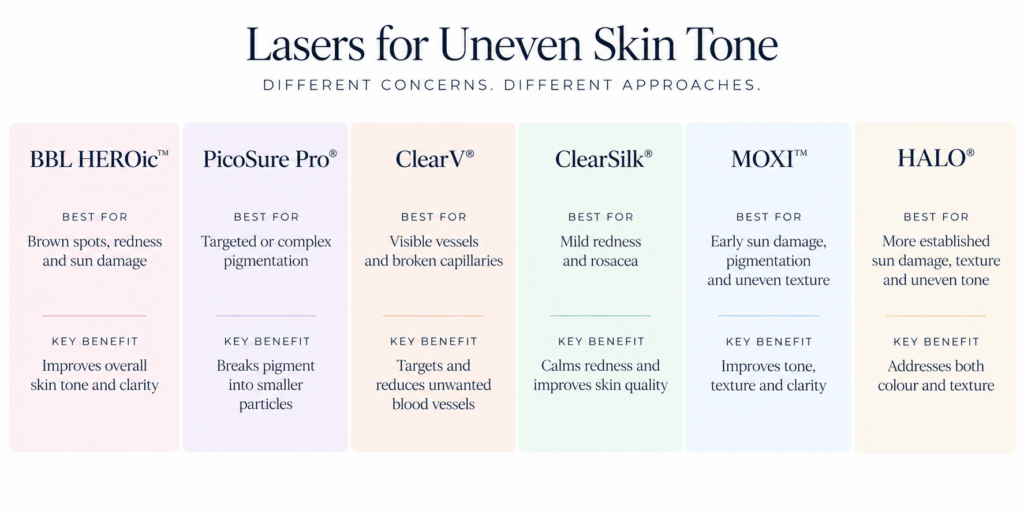
Technologies used at TLC for pigmentation and wider sun damage include BBL® HEROic™, PicoSure Pro®, MOXI™ and HALO® within the Sciton JOULE® Light & Laser Technologies platform.
The important distinction is that they do not all target the skin in the same way.
BBL HEROic or PicoSure Pro for Pigmentation?
BBL HEROic uses BroadBand Light to target colour within the skin and can treat relatively broad areas efficiently. This can make it particularly relevant when pigmentation forms part of wider photodamage, such as scattered brown spots alongside redness, visible vessels and a mottled complexion.
BBL HEROic can target both melanin within brown pigmentation and haemoglobin within unwanted blood vessels. It can therefore be useful when both brown and red changes are contributing to uneven skin tone.
PicoSure Pro takes a different approach. It delivers extremely short picosecond pulses that break unwanted pigment into smaller particles while limiting excessive heat build-up in the surrounding skin.
It may be considered when pigmentation itself is the main concern, including sunspots, dark patches and some cases of melasma, and is suitable across a wide range of skin tones.
The difference is less about which technology is “better” and more about what needs treating. BBL HEROic may be useful for widespread photodamage involving both pigmentation and redness, while PicoSure Pro may be preferred for more targeted or complex pigment, particularly where limiting thermal energy is important.
Our guide to BBL HEROic vs PicoSure Pro looks at this distinction in more detail.
What Is the Best Laser Treatment for Facial Redness?
Redness requires a different approach because the target may be blood within vessels rather than unwanted melanin.
Persistent flushing, rosacea, broken capillaries and visible facial vessels can all appear red, but the pattern of redness helps determine which treatment may be appropriate.
BBL HEROic can be useful for more diffuse redness, particularly when redness appears alongside pigmentation or wider sun damage.
For more distinct visible vessels, ClearV® may be considered. Laser energy targets the unwanted vessel, which then gradually clears. It can be used for visible facial vessels, broken capillaries and certain vascular changes associated with rosacea.
ClearSilk® is a gentler option used for mild redness, rosacea, uneven texture and general skin revitalisation. It gently heats the deeper skin while leaving the surface intact, usually with little to no downtime.
This illustrates why identifying the type of redness matters. Generalised flushing across the cheeks is not necessarily approached in the same way as a small number of clearly visible vessels around the nose.
How do MOXI and HALO Improve Uneven Skin Tone?
MOXI and HALO can improve uneven skin tone by treating pigmentation alongside the changes in texture that can make sun-damaged skin look less clear and smooth.
MOXI™ is a non-ablative fractional laser that encourages skin renewal. It can help improve early sun damage, pigmentation, melasma, dullness and uneven texture, making it particularly useful when the aim is a clearer, smoother and more even-looking complexion with relatively limited downtime.
HALO® combines ablative and non-ablative fractional laser energy and may be considered when sun damage is more established. As well as uneven pigmentation, it can address concerns such as rough texture, visible pores, fine lines and scarring.
The main difference is the degree of correction needed. MOXI is generally suited to earlier or milder changes, while HALO may be considered when both uneven tone and texture are more established.
Can Different Laser Treatments Be Combined?
Yes. This can be useful when more than one factor is contributing to uneven skin tone.
Sun exposure over time may leave a combination of brown pigmentation, redness and changes in texture. Different technologies can then be used to address different elements rather than expecting one treatment to do everything.
For example, BBL HEROic may address pigmentation and redness, while MOXI can be considered where texture and overall clarity also need improvement. HALO may be relevant where more established photodamage requires resurfacing alongside colour correction, while ClearSilk can be used where milder redness and general skin quality are the focus.
PicoSure Pro may have a more targeted role when persistent or complex pigmentation is the main concern.
Treatments do not necessarily need to be carried out at the same time. They can also be staged according to the concerns being addressed and how the skin responds.
Does Skin Tone Affect Which Laser Treatment Is Right for You?
Yes. Natural skin tone is an important consideration because melanin is present throughout the skin, not only within brown spots. In melanin-rich skin, poorly selected settings or excessive heat can increase the risk of post-inflammatory hyperpigmentation or, less commonly, loss of pigment.
The type of concern matters too. BBL HEROic may be considered for widespread sun damage involving pigmentation and redness, PicoSure Pro for more targeted or complex pigmentation, ClearV for visible vessels and ClearSilk for milder redness. MOXI can address early pigmentation and uneven texture, while HALO may be considered when sun damage and textural changes are more established.
Melasma requires particular care because it can be influenced by hormones, UV exposure, visible light, heat and inflammation. PicoSure Pro or MOXI may be considered for appropriate patients, depending on skin tone, the type and depth of pigmentation and previous responses to treatment.
This is why there is no single “best laser” for uneven skin tone. Treatment choice depends on what is causing the colour, the condition of the surrounding skin and factors such as skin tone and recent sun exposure.
Our guide to laser treatments for melanin-rich skin explains this further, while Pigmentation Reduction Services covers the wider approaches to pigmentation.
FAQs About Brown Spots, Redness and Laser Treatment
Can brown spots come back after laser treatment?
They can. Treating existing pigmentation does not prevent new pigmentation from developing, particularly following further UV exposure. Consistent sun protection remains important after treatment.
Why do brown spots sometimes look darker after treatment?
Some pigment-targeting treatments can make treated areas appear temporarily darker as the pigment responds. It may then gradually flake or clear as the skin renews. What happens after treatment depends on the technology used.
Can I have laser treatment if I have a tan?
A recent tan changes the amount of melanin present in the skin and can affect the suitability of some treatments. Recent sun exposure therefore needs to be taken into account when planning laser or light treatment.
Can facial redness be completely removed?
It depends on what is causing it. Individual visible vessels behave differently from ongoing flushing or rosacea, which may require longer-term management.
Should I treat pigmentation before having a resurfacing laser?
Not necessarily. If colour and texture are both contributing to uneven skin, treatments may be combined or carried out in stages. The sequence depends on which concerns are being addressed.
Considering Treatment for Uneven Skin Tone in London?
Brown spots, redness and uneven skin tone can look similar on the surface, but understanding what is creating the colour is the most useful starting point.
At The Lovely Clinic in Knightsbridge, London, a consultation can help distinguish between pigmentation, vascular redness, sun damage and textural changes before deciding whether a pigment-targeting, vascular, resurfacing or combined approach is appropriate.
If you would like to understand what may be causing your uneven skin tone and which treatment options may be suitable, book a consultation with our team at The Lovely Clinic.